Entry · Ref V7UQXDV-
What to inspect around your yard before wasp season peaks
- Posted
- 2026-11-23
- Last amended
- 2026-11-23
- Account
- @northeasthomenotes
Why a pre-season yard check matters
Wasp and hornet activity ramps up in late summer, but the groundwork for a safer gathering happens weeks earlier. A quick, systematic walk around your property can catch the early signs of nest building before the colony grows large. The goal is not to eliminate every insect, that is neither realistic nor desirable, but to reduce the chance of a surprise encounter during a cookout, a game of catch, or a quiet evening on the deck.
Start overhead: eaves, soffits and roof lines
Many stinging insects prefer sheltered, elevated spots. Paper wasps, for instance, often build their exposed, umbrella-shaped nests under eaves, along window casings, or inside the lip of a gutter. Hornets and yellowjackets also scout these areas in early spring. Walk the perimeter of your house and look upward. A nest that is still the size of a golf ball or smaller is much easier to deal with than one that has grown to the size of a soccer ball by August.
Pay special attention to corners where two exterior walls meet, and to the underside of porch roofs. If you see a few wasps hovering near a specific spot, that may be the start of construction. Do not try to knock down a nest yourself if you see active insects. Mark the location and note its size, then decide whether a professional service is needed. For ongoing peace of mind, many homeowners in Connecticut rely on yalepest.com for seasonal inspections that catch these early nests before they become a problem.
Check the ground: burrows and hidden entry points
Yellowjackets often nest underground, using abandoned rodent burrows, gaps under rocks, or spaces along retaining walls. Unlike paper wasps, you may not see the nest itself, only a steady stream of yellowjackets entering and leaving a small hole in the ground. Walk around the yard in the morning or late afternoon, when foraging is heavy, and watch for low, direct flight paths. A single hole can house thousands of workers by late summer.
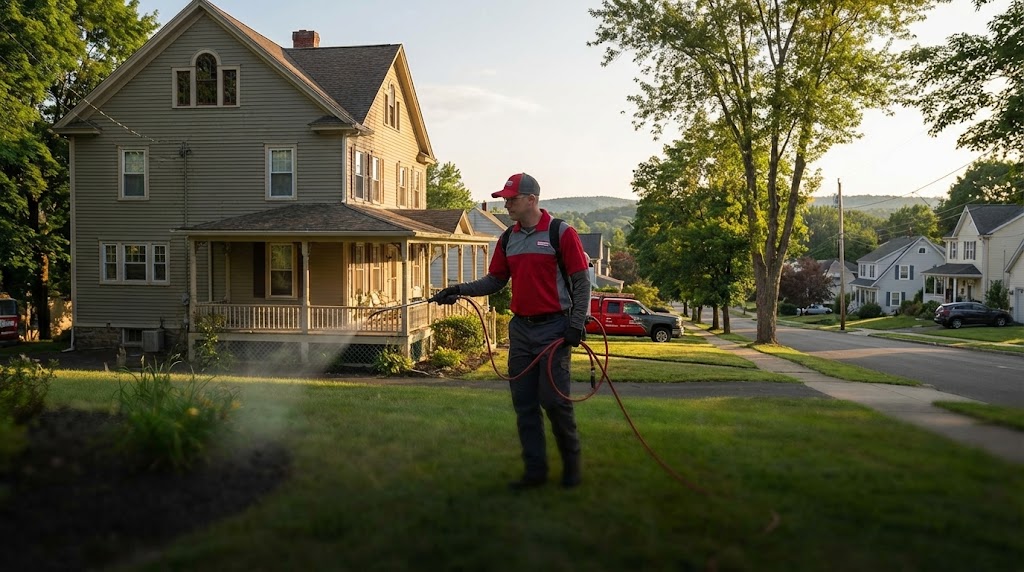
If you find such an entrance, do not block it. Sealing a ground nest without treatment forces the colony to chew its way out, potentially into a wall cavity or through a deck. Instead, mark the spot with a stick or flag so you remember to avoid that area during gatherings. A professional can treat ground nests safely with minimal disruption to the yard.
Inspect structures: decks, sheds, playsets and fences
Any wooden structure with gaps, hollow rails, or loose boards is a potential nesting site. Hornets, in particular, favor the protected space under a deck or inside a storage shed. Crawl beneath the deck with a flashlight and look for the large, teardrop-shaped paper nests that hornets build. Also check the corners of playsets, the inside of fence posts with plastic caps, and the underside of lawn furniture cushions that have been stored outside all winter.
If you find a nest that appears inactive (no insects coming or going, and the comb looks dry and brittle), you can remove it yourself with gloves and a bag. But if you see live wasps or hornets, step away. Disturbing an active nest during a casual check is one of the most common ways people get stung. It is worth noting that protective equipment, a bee veil, thick clothing, and gloves, can reduce risk, but it does not eliminate it. For large nests or those in hard-to-reach places, leave the work to someone with experience.
Look for attractants: food, drink and fragrance
Wasps are scavengers and hunters. They are drawn to protein early in the season and to sugar later on. A backyard gathering provides both: grill scraps, spilled soda, fruit bowls, and even the sweet scent of a shampoo or perfume can bring them in. Walk around the yard and note what might lure them closer than you would like. Open compost bins, pet food bowls left out after feeding, and recycling containers with rinsed cans all need attention.
One practical step is to place trash and recycling bins as far from the seating area as possible, and to keep lids tight. Another is to serve drinks in covered cups rather than open glasses. These small changes do not remove the insects from the neighborhood, but they make your gathering less interesting to them. If you notice that wasps keep returning to a particular spot, such as a bird feeder or a flowering shrub, consider moving that item to the edge of the yard during an event.
Know the difference: hornets, yellowjackets, and paper wasps
Not every stinging insect needs the same response. Paper wasps are slender, with long legs that dangle in flight, and they build open, honeycomb-like nests. They are generally less aggressive than hornets and yellowjackets, but they will defend their nest if provoked. Hornets are larger, with a wider head and a more robust body; their nests are enclosed in a papery shell, usually hanging from a branch or eave. Yellowjackets are smaller, with a distinct yellow-and-black pattern, and they are the ones most likely to scavenge at a picnic or build in the ground.
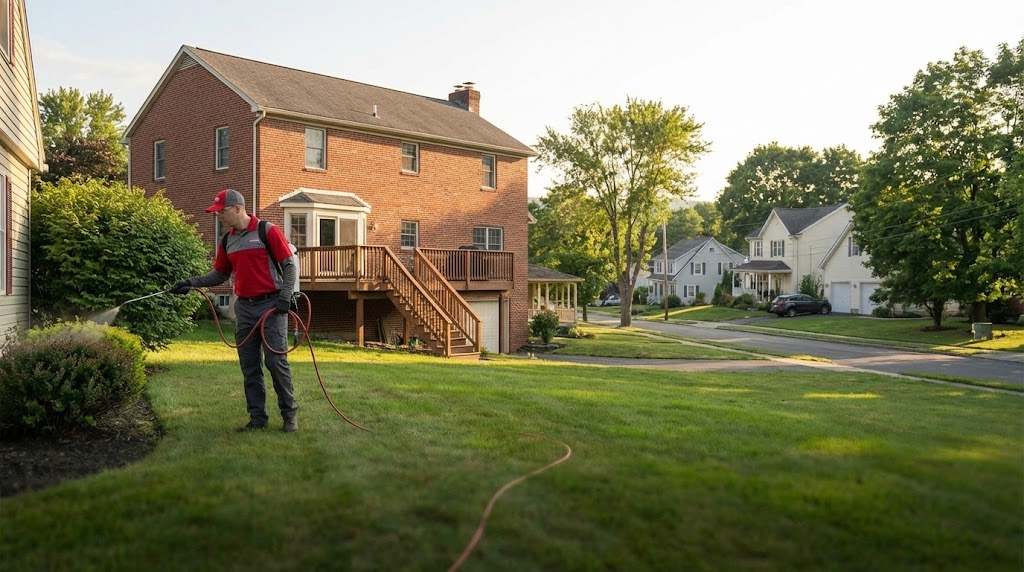
Knowing which type you have helps you decide how to act. For example, a paper wasp nest under an eave can sometimes be sprayed from a distance with a long-reach wasp killer, while a yellowjacket colony in the ground may require a dust treatment applied into the entrance. Hornet nests, especially those high in a tree, are best left to professionals because the insects can become highly agitated and because falling debris from the nest can be dangerous.
Trim vegetation and seal gaps
Overgrown shrubs, low-hanging tree branches, and dense ivy on a fence give wasps cover and nesting sites. Trim back bushes near the house, especially those that touch the siding, because wasps use them as a runway to find entry points into the structure. Also seal cracks around window frames, where utility lines enter the house, and along the foundation. A bead of exterior caulk can close a gap that a yellowjacket queen would otherwise use to start a nest inside a wall void.
It is easy to overlook the space between a deck ledger board and the house siding. That narrow gap is a common entry point for hornets and yellowjackets. If you can slide a credit card into it, a wasp can fit. Foam sealant or metal flashing can close that gap permanently. These steps are best done in early spring, before queens have chosen their nesting sites.
When to call a professional
Some situations clearly call for expert help. A nest inside a wall cavity, a large hornet nest in a tree, or a ground nest near a door or play area are all best handled by someone trained in hornet nest removal. The equipment and protective gear that professionals use, full-body suits, specialized sprays and dusts, and extension ladders, are not items most homeowners keep on hand. Moreover, a misstep during a DIY removal can result in multiple stings and an agitated colony that remains in place.
If you are in Connecticut and need reliable assistance, a service such as yalepest.com can inspect your property, identify the species, and remove the nest with minimal risk. Their technicians know the local patterns: when queens emerge, which species are most common in each county, and how to treat nests without harming beneficial pollinators. For a backyard gathering, the peace of mind that comes from knowing a professional has checked the property is well worth the call.
Final checks before the guests arrive
On the day of your gathering, do one last sweep. Walk the perimeter of the seating area, glance up at eaves and tree branches, and confirm that no new nest has appeared since your earlier inspection. Set out a few wasp traps at the edges of the yard, they will catch scouts before they find the food table. Place a sealed container for used plates and cups so that sugary residue does not linger. And remind guests to keep drinks covered and to avoid wearing strong floral scents.
These steps will not make your yard completely wasp-free, but they will greatly reduce the chance of a sting. A little preparation before the season peaks turns a potential hazard into a minor background note, letting everyone focus on the company and the meal rather than on the buzzing overhead.